

Top Five residential markets in 2025
ERIN JOHNSTON
Deciding where to focus sales efforts this solar season?
We’ve been in the kitchen and are cookin’ up the perfect recipe for your summer success in the residential solar space. Whether you are purchasing leads, blitzing and door knocking, or practicing virtual selling, there are so many factors to consider when evaluating which markets will provide the best return on your investment.
You’re in luck because this market analysis takes into consideration crucial factors for where to focus your efforts including residential homeowner statistics coupled with current utility data, local incentives, and market saturation trends.
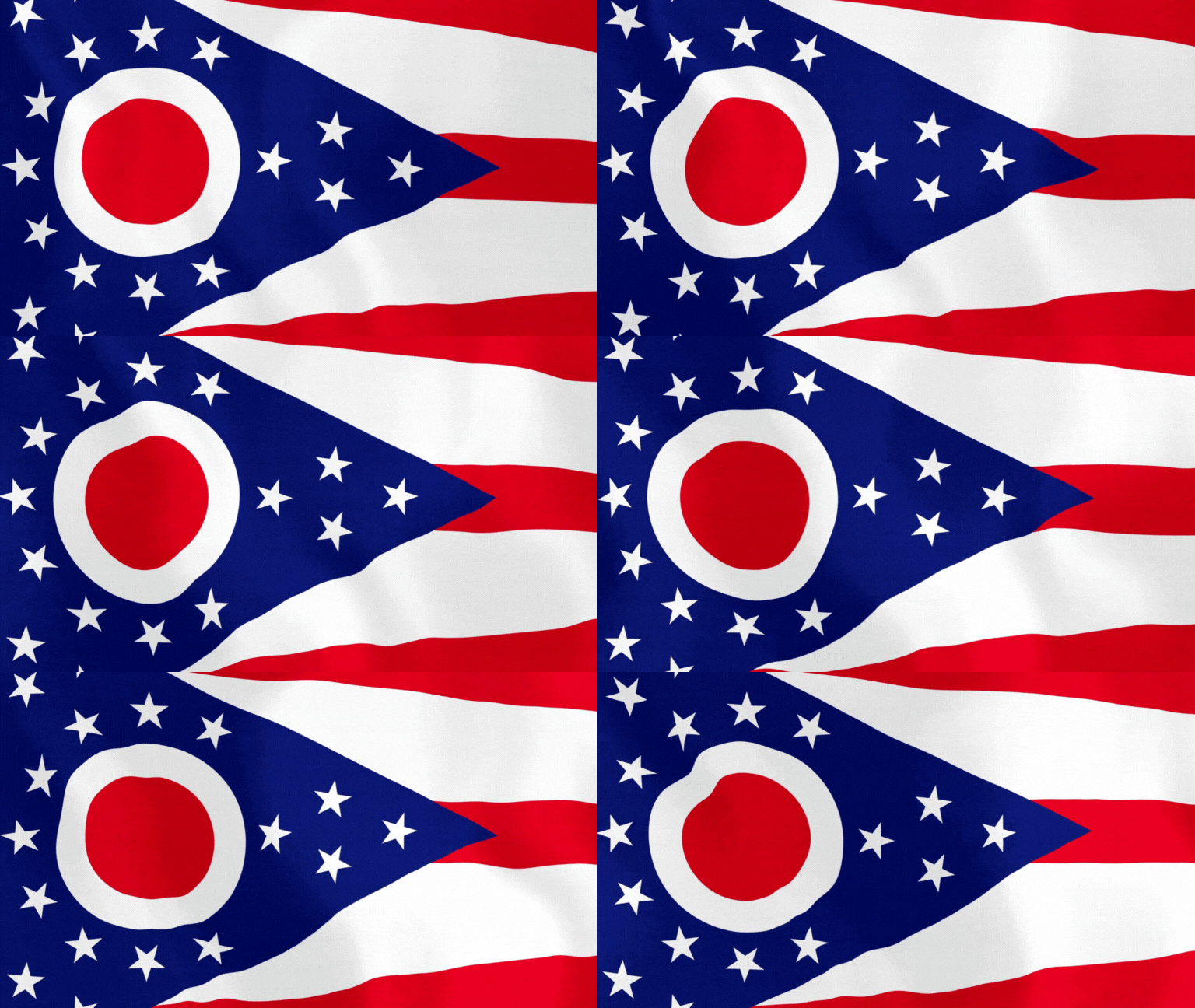
#5 Ohio Go Buckeyes!
Although solar adoption has been gaining popularity in the Midwest for the last few years, it is still an emerging market, particularly in Ohio. The average residential install size in Ohio is 8.8kW, making system sizes larger than the national average of 7.6kW. Ohio also has the highest average price per kilowatt of solar sold hovering at $6/watt. While other midwest states had decreased growth or fell flat last year, Ohio has continued to increase solar adoption over the last two years. With the average electric bill at about $107/month, a Lease or Power Purchase Agreement is still more attractive than a purchased/financed system. Unfortunately, there are no local incentives at this time but homeowners who purchase can take advantage of the federal incentive.
Population: 12 Million
Homeowner Rate: 65%
Household Income: $73,770
Average FICO: 715
Growth Potential: 13%
kWh Rates: $0.17/kWh
kWh Rate Trend: Rising
Market Saturation: Low
Local Incentives: None
Advertisement - continue reading below

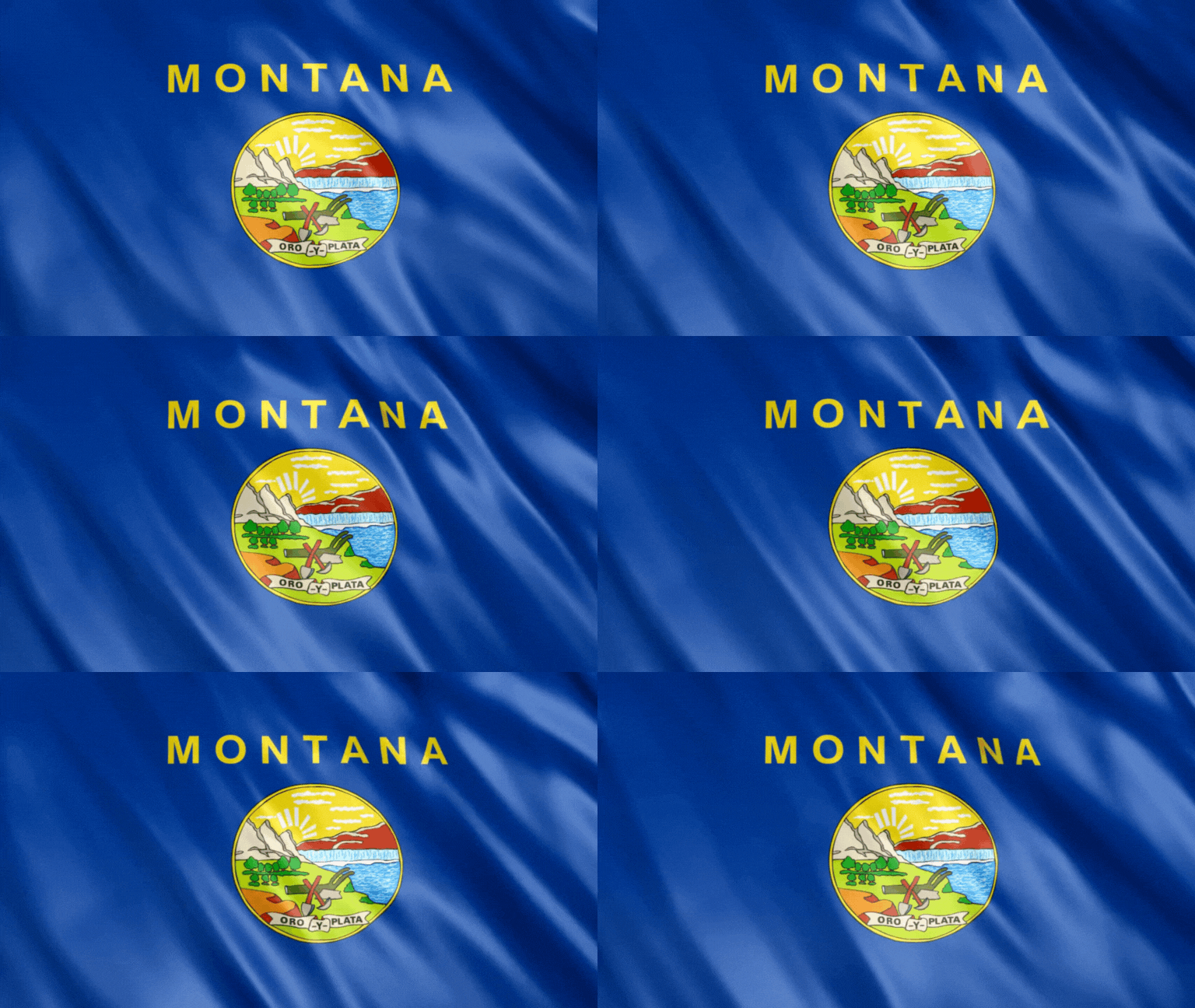
#4 Montana Wild West!
Montana’s solar market grew by 39% in 2024 resulting in the highest growth rate among all states in the union. It is expected to grow another 18% this year. The Alternative Energy Loan Program offers low-interest loans to solar customers and has been credited with putting solar on the map for Montanans. Despite a low population and affordable electricity, Montana does have over three hundred days of sunshine annually. The family income levels and credit quality also rank the highest in the region. Montana’s culture fosters the ideals of independence and solar adoption is no exception. Having a household that is energy independent is the angle when selling here.
Population: 1 Million
Homeowner Rate: 71%
Household Income: $114,636
Average FICO: 720
Growth Potential: 18%
kWh Rates: $0.12/kWh
kWh Rate Trend: steady
Market Saturation: Low
Local Incentives: property tax exemption

#3 Tennessee Let’s Grow!
Tennessee is an emerging renewable energy market particularly for residential solar. This state has lower rates at $0.12/watt, which is approximately 20% lower than the national average. However, last August, Tennessee Valley Electric approved a 5.25% increase to rates. Although the average homeowner credit quality is lower than the national average, it still falls within a “good” range. There is no net metering in Tennessee but customers are still able to earn money for excess generation through the TVA Dispersed Power Production Plan. An increasing residential population and a statewide property tax exemption also make this an attractive market. This market is projected to be up 23% from last year and battery adoption will increase in the future.
Population: 7.2 Million
Homeowner Rate: 70%
Household Income: $67,097
Average FICO: 700
Growth Potential: 23%
kWh Rates: Up 5.25%
kWh Rate Trend: rising
Market Saturation: Low
Local Incentives: green energy property tax incentive

#2 Michigan Better Late than Never!
Michigan residents are late to the party for installing rooftop solar but it is expected to be a burgeoning and emerging market. In July of 2024, Michigan passed a Right to Solar initiative called the Homeowners’ Energy Policy Act, which goes into effect on April 1, 2025. Some of the electricity being supplied to Michigan comes from Canada, making those rates also subject to new tariffs. Michigan rates continue to increase across the state, while three fourths of their residents are homeowners, with healthy incomes and great credit quality. Since solar panels actually perform better in cold temperatures, the payback period in this state averages less than ten years. Residents can opt to sell 100% of their generation back to the grid or opt into net metering for selling excess after consumption.
Population: 10 Million
Homeowner Rate: 75%
Household Income: $69,183
Average FICO: 720
Growth Potential: 6%
kWh Rates: $0.19
kWh Rate Trend: rising
Market Saturation: Low
Local Incentives: production tax credit
Advertisement - continue reading below

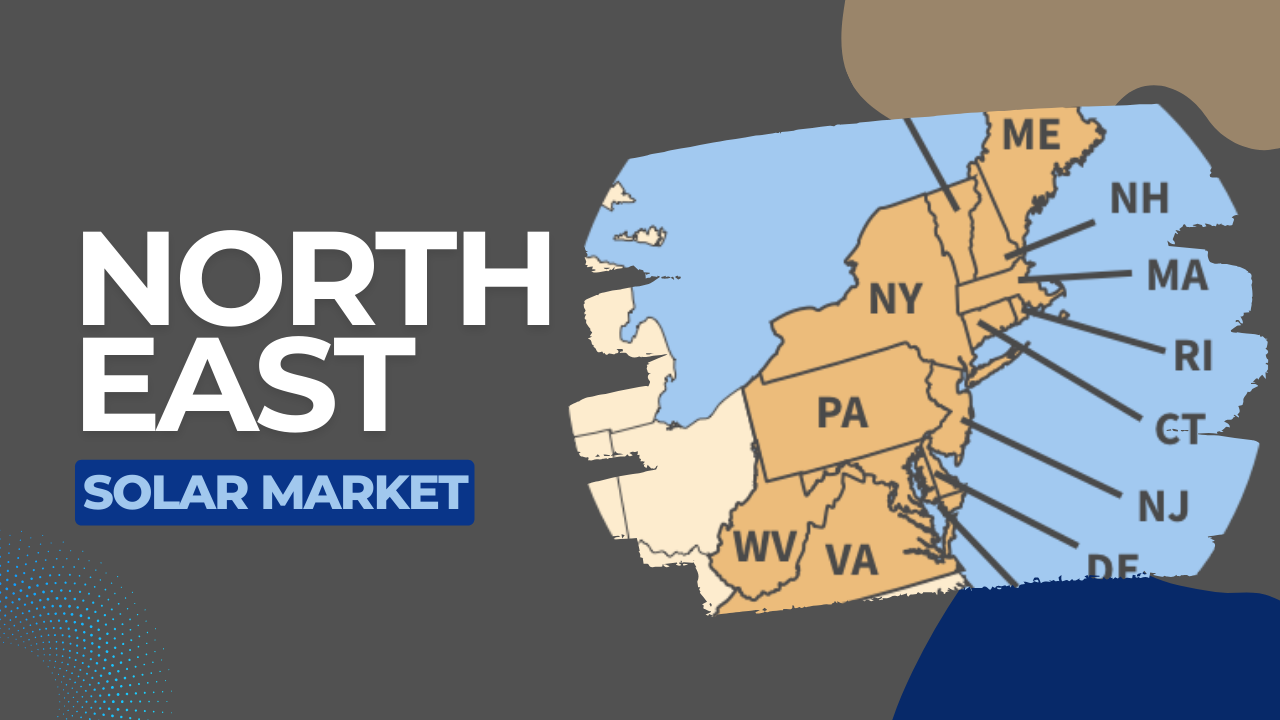
#1 The Northeast Established New England!
The Northeast is projected to be the hottest market this year. This US region has a dense population with a high homeowner rate, and the healthiest incomes coupled with excellent credit quality. Connecticut, Delaware, Maine, Maryland, Massachusetts, New Hampshire, New Jersey, New York, Pennsylvania, Rhode Island, Vermont, Virginia, and Washington DC are all projected to have consistent growth. The Northeastern region has unanimous government support to increase renewables with many promoting solar adoption, and each state is offering a variety of local incentives. Sold price per watt is still higher than other markets, system sizes align with the national average of 7kW, and utility rates continue to rise across the board. The Northeast meets every benchmark of a healthy and stable positive growth market for residential solar sales.
Population: 57 Million
Homeowner Rate: 70%
Household Income: $80.000
Average FICO: 715
Growth Potential: 12%
kWh Rates: $0.25
kWh Rate Trend: rising
Market Saturation: medium
Local Incentives: varies by state

Considering Other Markets
Although they didn’t make the top five list of hottest markets, there is still plenty of opportunity in these five markets.
California is bouncing back from an impactful change to Net Metering in all three major utility provider territories but continues to prevail in most kW installed nationwide in 2024. Battery adoption is at an all time high which equates to higher average tickets. As early adopters’ NEM Agreements expire there will be a huge demand for storage. It is still a very saturated market but finding a niche market will lead to success. For example, many of the new builds have small systems that only meet the California Solar Initiative requirements. They lack system sizes and batteries that will cover consumption offset.
Florida continues to grow and remains the second largest market in the country. Despite an atrocious decline in 2024, government level conflict over net metering, and unpredictable weather patterns, this market is expected to make a big comeback this year. The Right to Solar initiatives continue to foster adoption while net metering allows customers to buy and sell power. This market is expected to grow by 8% this year.
Texas had the third most kW of residential solar installed in 2024. (California being the first and Florida being the second). Solar adoption is expected to continue growing despite low kWh rates, poor credit quality, and low battery adoption rates. With a growing population, unstable grids and inclement weather conditions, there are emerging Virtual Power Plant programs to incentivize battery adoption and a demand for higher than average system sizes.
Minnesota is an emerging residential solar market due to state and local governments that support and promote renewable energy adoption. Minnesota has legislation that provides residential homeowners a “Right to Solar” and many jurisdictions have digital permitting, creating fast turn times for install. Minnesotans overall have a middle class income but they have the highest average FICO scores in the nation at 730. XCel utility offers a sizable rebate program for low income residents, electric rates continue to rise, and average system sizes remain larger than the national average.
Washinton has approved a $156 million fund to help income qualified homeowners go solar. The program is expected to launch in early 2026 which will likely increase saturation after this year. Currently, Washington residents have above average credit quality, are high earners, and support solar adoption. This state is known for being cloudy and rainy but they actually get over 200 days of sunshine with the eastern part of the state seeing more. Rates are relatively low at $0.12/kWh but expected to rise over time and a 12% growth in residential solar is expected this year.
Big picture is there is still plenty of pie to go around. Strategic planning and thoughtful consideration based on a comprehensive market analysis will increase your chances of a successful summer selling solar. There are plenty of local markets not included in this piece that will also grow and lead to success. Please be mindful of how your strategies align with your business model and don’t forget that no matter where you are selling, you are contributing to a renewable America.
Disclaimer/Credits This article is solely for informational purposes. This research/analysis was a compilation of data from credible sources such as Ohm Analytics, Gemini AI, US Government Census Data, and Market Experience. The conclusions drawn from this market research have been interpreted by and are the sole opinion of its author. Solar Business Insider does not guarantee that you will be successful if you choose to target the specific listed markets.
About The Author

Erin Johnston
Erin Johnston is a Solar Business Consultant based in Northern California. With over a decade of experience in residential home improvement—including HVAC, plumbing, and solar—Erin specializes in home performance and energy efficiency. A UC Davis graduate, she is actively involved in her local Chamber of Commerce and also coaches high school softball.
Exclusive Offers From This Months Sponsors




💌 Did a friend share this with you?
That’s because they think you’ll love it. Get started with your own subscription for just $5 and never miss another issue!