
A RADICAL REBIRTH
How Abby BucHmiller is Transforming the Solar Industry Once Again
BY BRENT ATTAWAY
CLICK BELOW TO WATCH

The Rise of a Solar Powerhouse
In the world of solar, few stories are as dramatic as Abby Buchmiller’s.
She helped build Empire Solar Group into a $200 million behemoth, only to watch it collapse in a whirlwind of financial chaos.
Now, she’s back—wiser, stronger, and more determined than ever—with a new company, RDCL, that aims to revolutionize how solar businesses operate.
But before we talk about where she’s going, let’s take a look at where she’s been.
From the Wilds of Alaska to the Boardroom
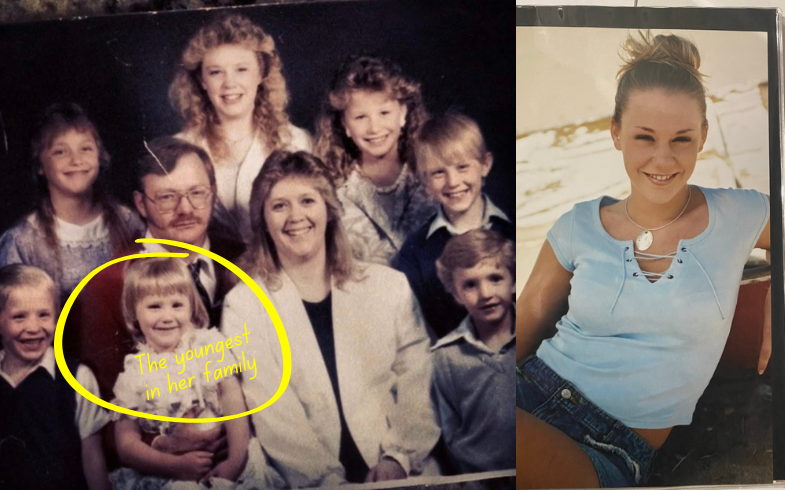
Abby’s journey didn’t begin in a high-rise office or a Silicon Valley startup. It began in the middle of nowhere—literally.
Born in Utah but raised in the remote wilderness of Alaska, Abby grew up between a reindeer farm and a wolf farm. Her parents, resilient and hardworking, built businesses from scratch, which meant she witnessed both the brutal struggles and the triumphant victories of entrepreneurship firsthand.
Her father’s career in oil eventually pulled the family south to Arizona, where Abby’s rebellious streak led to her getting kicked out of high school. But instead of letting that define her, she pivoted. She earned her diploma through an alternative program, took on multiple jobs, and quickly found herself immersed in the business world.
By the age of 20, she was helping her father build an oil and gas startup—an experience that gave her an inside look at scaling a company in a high-stakes industry. Little did she know, these lessons would prepare her for the rollercoaster ride of a lifetime in solar.
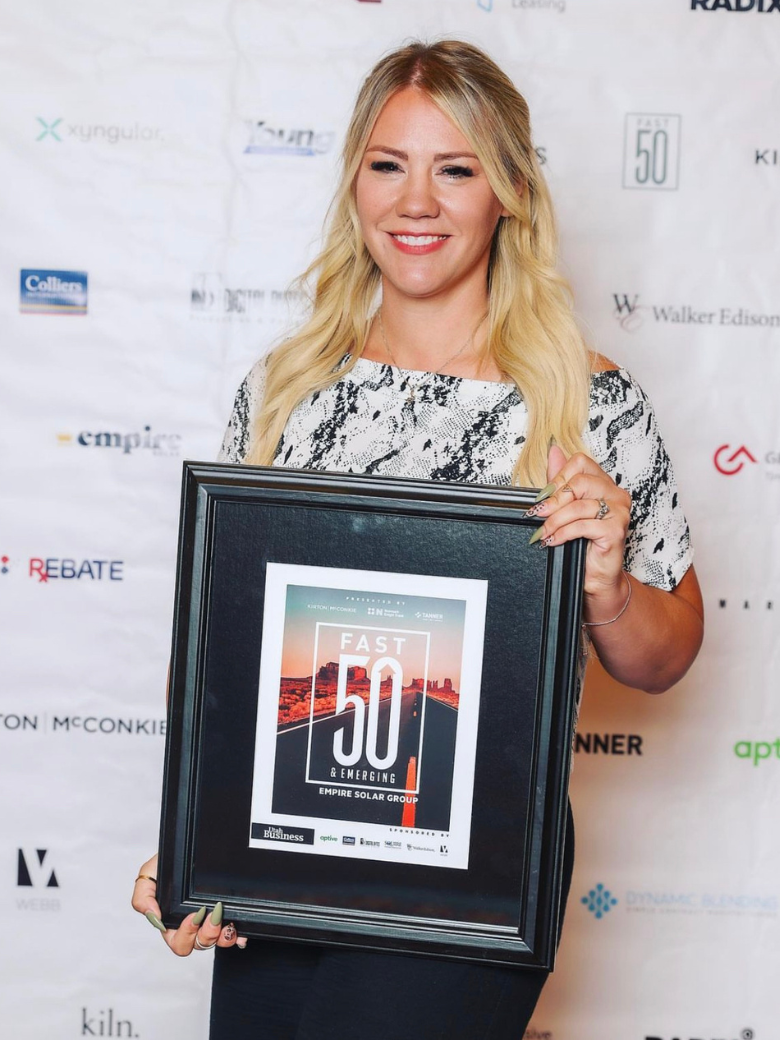
Photo of Abby's Holding Utah Business Fast 50 & Emerging Award
Building an Empire
In 2017, Abby and her family made a pivotal career move from oil into solar. Originally, she and her partners wanted to sell DIY solar kits, but the market wasn’t ready. So they pivoted to serving the booming solar dealer model, connecting aggressive sales teams with their installation services.
Empire Solar Group took off like a rocket.
With Abby as CEO, the company scaled at an unprecedented pace. Sales teams were transitioning from seasonal door-to-door operations to year-round businesses. Digital marketing was exploding. The demand for quality solar installations was at an all-time high. And Empire was in the right place at the right time.
Their secret? Relentless focus on operations and communication.
Abby and her team built a system that gave both homeowners and sales reps transparency in the solar installation process—they were innovating and building a “pizza order tracker” for solar. This operational excellence fueled rapid expansion, and at its peak, Empire had over 500 employees and was installing across multiple states.
But with rapid growth comes risk. And Empire was about to learn that lesson the hard way.
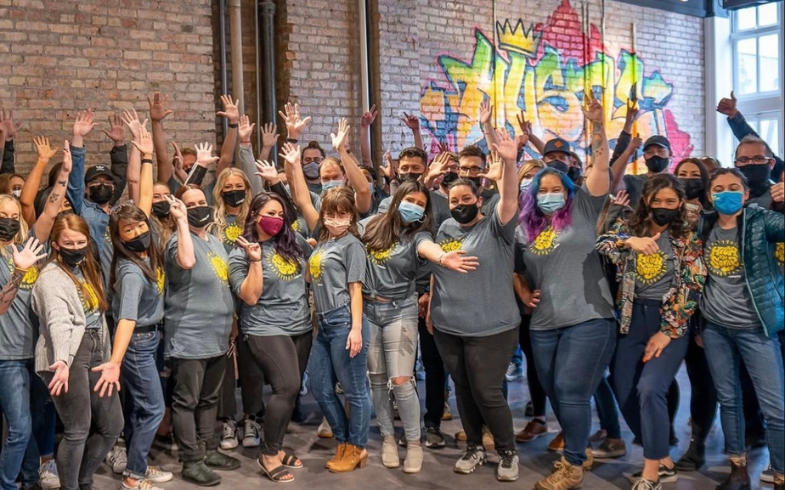
Photo of Empire Solar Team
Advertisement - continue reading below

The Fall of an Empire
In 2020, the cracks began to show. COVID initially seemed like a death blow to the solar industry, but then—boom—sales tripled overnight. Instead of collapsing, Empire was overwhelmed with demand.
And while that sounds like a good problem to have, it became their Achilles’ heel.
Like many fast-growing companies, Empire relied on upfront payments (known as M1 funding) to cover sales commissions, materials, and installation costs. But when that funding suddenly stopped, the house of cards collapsed.
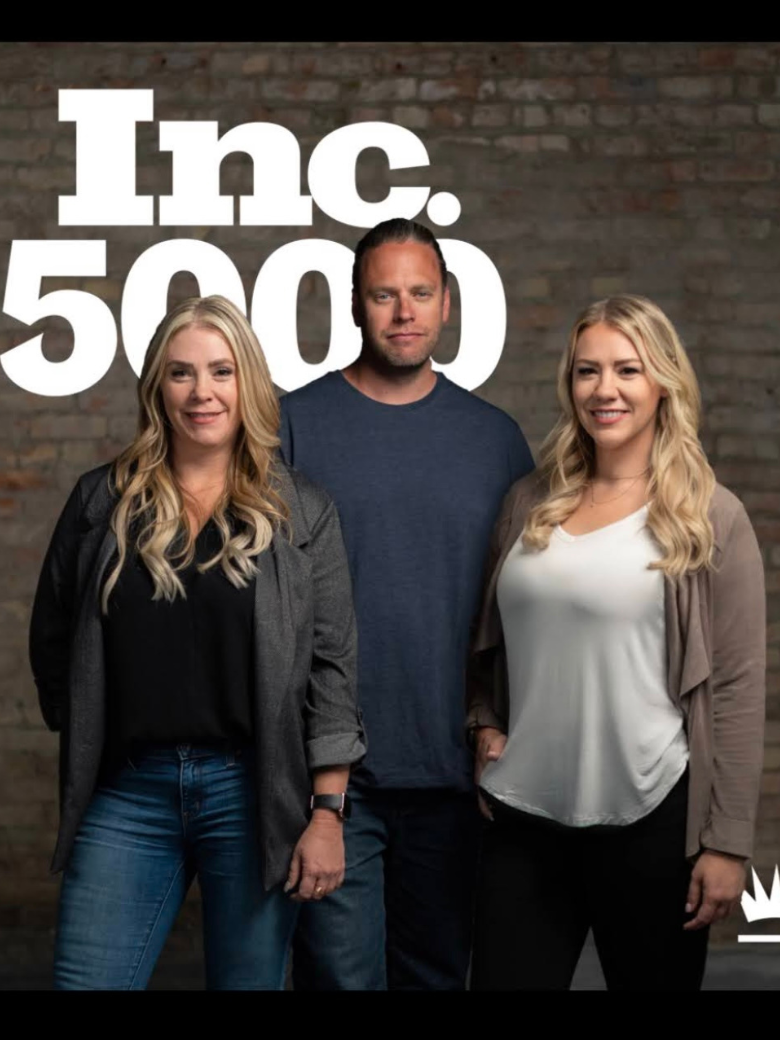
Photo of Empire Solar Leadership Team Featured in the Inc. 5000
Abby and her team scrambled. They cut costs. They sought outside investors. Eventually, they secured a deal that they believed would save the company.
But the moment the ink dried on the acquisition agreement, things took a turn Abby and her team never saw coming. The new owners seized operational control, sidelined her, and within weeks, filed for Chapter 7 bankruptcy—shutting down Empire in the most brutal way possible.
For Abby, it was more than just a business failure. It was personal. Employees were left without jobs. Customers were left in limbo. And the public scrutiny was relentless.
“I felt responsible for everything,” she recalls. “The people. The projects. The reputation. It was devastating.”
But Abby is not one to stay down for long.
The Birth of RDCL: A New Vision for Solar
After stepping away from the industry to process the fallout, Abby realized something. The problems Empire faced weren’t unique. The entire industry was struggling with inefficiencies in operations, unpredictable costs, and a lack of scalable solutions.
So she built what she wished had existed when she ran Empire.
Enter RDCL (Radical)—a tech-enabled platform that provides scalable, on-demand labor and operational support for solar businesses. Instead of relying on traditional dealer models or expensive in-house teams, solar companies can now outsource critical functions—like site surveys, permitting, and project management—through RDCL’s streamlined, fixed-cost system.
It’s solar operations, simplified.
And the response?
Overwhelmingly positive. Companies that once struggled with cash flow and project delays are now seeing stability and growth.
“This isn’t just about running another solar company,” Abby explains.
“It’s about solving the problems that have plagued the industry for years.”


The Future of Solar: Abby’s Take
With RDCL, Abby is tackling one of the most hotly debated topics in solar: Is the dealer model dying?
Her answer? Yes and no.
The traditional redline model is becoming unsustainable. Installers are bearing too much risk, while dealers cash in without accountability.
Abby predicts that the future lies in the revenue-sharing—a model that aligns incentives so both sales teams and installers share in the upside and the downside. This isn’t necessarily a new idea, but it’s underutilized and highly misunderstood by dealers and installers.
She also sees outsourcing and specialization playing a much larger role in the industry. Instead of bloated internal teams, companies will leverage on-demand solutions like RDCL to stay nimble and profitable.
Her advice for solar entrepreneurs in 2025?
Don’t chase volume—chase profitability.
Prioritize operational efficiency over aggressive sales growth.
Protect your cash flow at all costs.
Build a business that can weather industry changes, not just ride the highs.
Advertisement - continue reading below

The Comeback is Always Stronger Than the Setback
Abby Buchmiller’s journey is a masterclass in resilience. She built an empire, lost it, and came back with something even better.
Her story isn’t just about business—it’s about leadership, adaptation, and learning from failure.
And as the solar industry continues to evolve, one thing is certain: Abby isn’t done yet.

Exclusive Offers From This Months Sponsors



💌 Did a friend share this with you?
That’s because they think you’ll love it. Get started with your own subscription for just $5 and never miss another issue!